
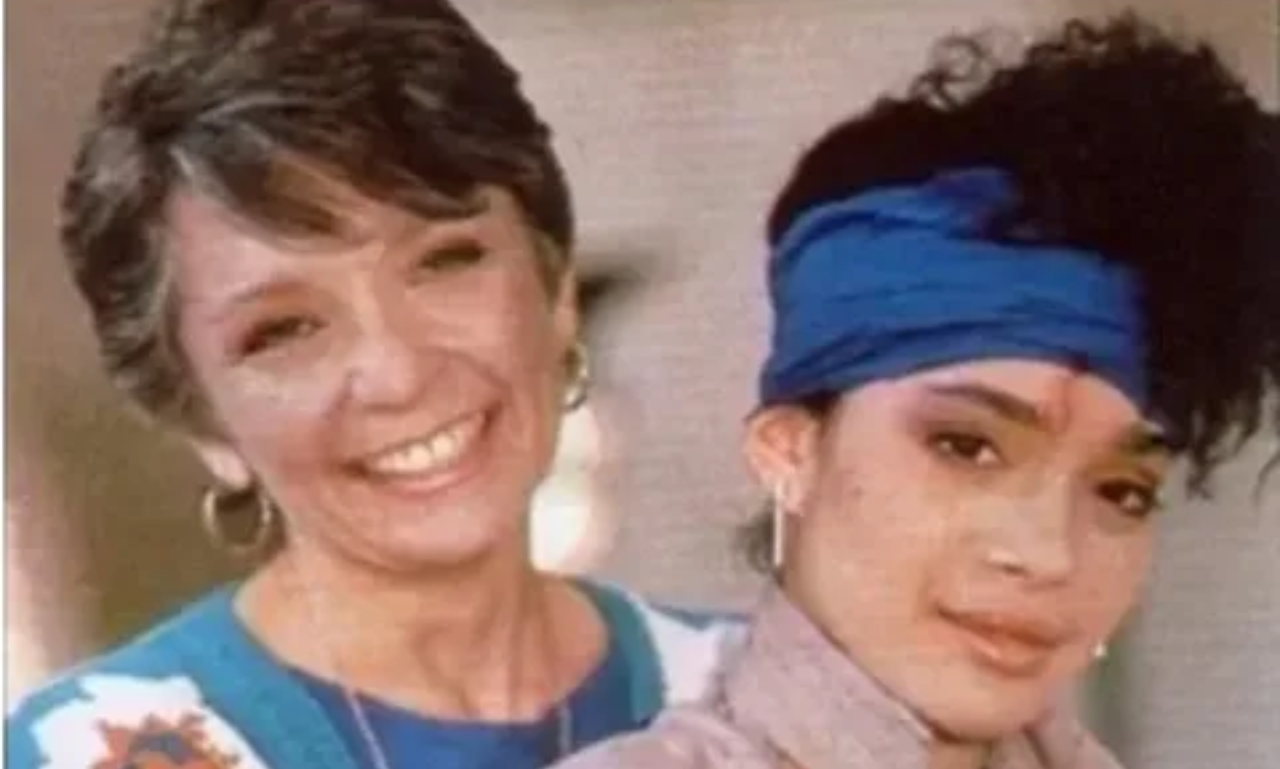
Arlene Litman never sought headlines, but her story is worth telling. As the mother of actress Lisa Bonet and the grandmother of Zoë Kravitz, Arlene Litman shaped one of Hollywood’s most creative and culturally rich family trees — not through fame, but through quiet, purposeful devotion.
This article covers her early life, career, marriage, influence on Lisa Bonet, and the enduring legacy she left behind.
Arlene Litman Bio
| Detail | Information |
| Full Name | Arlene Litman |
| Date of Birth | Early 1940s |
| Place of Birth | Pittsburgh, Pennsylvania, USA |
| Heritage | Ashkenazi Jewish |
| Parents | Eli Litman and Sylvia Litman |
| Profession | Schoolteacher, Music Educator |
| Partner | Allen Bonet (opera singer) |
| Children | Lisa Bonet |
| Grandchildren | Zoë Kravitz |
| Residence | Reseda, San Fernando Valley, Los Angeles, CA |
| Religion | Jewish |
| Date of Death | 1998 |
| Age at Death | Approximately 58 |
| Legacy | Mother, educator, multicultural matriarch |
Arlene Litman Physical Appearance
| Feature | Details |
| Build | Slender, graceful |
| Hair | Dark brown (in known-era photos) |
| Eyes | Brown |
| Style | Understated, professional |
| Notable Trait | Warm, composed presence reflecting her educator’s persona |
Early Life
Arlene Litman was born in the early 1940s in Pittsburgh, Pennsylvania, to Eli and Sylvia Litman. Her family followed Ashkenazi Jewish traditions, and her upbringing revolved around faith, community, and a deep respect for education. Pittsburgh at that time was a city shaped by industry and immigration, and her neighborhood reflected the close-knit Jewish communities that valued intellectual achievement.
From a young age, Arlene demonstrated strong academic instincts and a particular love for music. Her parents reinforced these traits, treating education not as an option but as a foundation for a meaningful life. That philosophy stayed with her permanently, guiding both her professional choices and her parenting decisions in the decades ahead.
Education Background & Path to Teaching
Arlene pursued formal education and earned the qualifications needed to enter the teaching profession. While specific university records are not publicly documented, her career as a classroom educator and music teacher points to a solid foundation in both pedagogy and the arts. She dedicated her professional life to nurturing young minds in the Los Angeles area.
Her teaching philosophy was distinctly holistic. She did not separate intellectual development from emotional growth, and she brought that approach into every classroom she led. According to family accounts, colleagues consistently described her as patient, perceptive, and deeply committed — traits that defined her equally as a mother.
Arlene Litman’s Career as a Music Teacher & Educator
Arlene Litman built her career as a music teacher and schoolteacher primarily in the San Fernando Valley, with Reseda in Los Angeles serving as a central location. Her classroom was known for being warm and intellectually engaging. She integrated cultural awareness into her lessons, encouraging students to explore music as a form of identity and expression, not just technique.
Studies consistently show that students with access to arts-integrated education perform better academically overall — a fact Arlene seemed to understand intuitively long before it became standard research. Her dedication extended beyond lesson plans. Many students recalled her ability to connect personally, making each child feel seen and capable.
Meeting Allen Bonet: A Cross-Cultural Love Story
Arlene’s life shifted when she met Allen Bonet, a professional opera singer of African-American heritage. Their relationship developed during an era when interracial relationships still carried enormous social risk in the United States. The landmark Loving v. Virginia ruling only arrived in 1967, meaning their early relationship existed in a legally hostile and socially complex environment.
Despite external pressures, the two formed a partnership rooted in shared passion for the arts. Allen’s operatic background and Arlene’s classical music education created a household where artistic expression was the native language.
The Marriage, Its Challenges, and What It Represented
Their relationship, though not without difficulty, reflected a broader American narrative about the slow dismantling of racial barriers. Arlene and Allen’s bond represented something larger than personal love — it was a quiet act of cultural resistance during a time when such unions were stigmatized publicly and sometimes legally.
However, the relationship eventually ended, leaving Arlene as a single mother to Lisa Bonet. Rather than retreat, she channeled that transition into a renewed commitment to raising Lisa with clarity, strength, and an abundance of cultural identity. The separation, while difficult, never diminished the values she carried forward into her parenting.
Raising Lisa Bonet in Reseda, Los Angeles
After the separation from Allen Bonet, Arlene raised Lisa primarily in Reseda, a community within the San Fernando Valley. The neighborhood’s working-class and multicultural character shaped Lisa’s early sense of the world. Arlene worked as a teacher during the day and came home to raise a daughter who would one day become one of television’s most iconic figures.
Her home was filled with music, books, and conversations that challenged Lisa to think critically about identity, art, and society. According to several biographical accounts of Lisa Bonet, her mother was her first and most influential teacher — both formally, through intellectual encouragement, and personally, through modeling resilience and self-respect.
Arlene Litman as a Single Mother in Changing America
The 1960s and 1970s tested American families in profound ways. The Civil Rights Movement, women’s liberation, and shifting definitions of family all collided during the years Arlene was raising Lisa alone. Single motherhood in that era carried significant social stigma, particularly for women who had been in interracial relationships.
Arlene confronted those pressures without public complaint. She maintained her teaching career, ensured Lisa’s educational needs were met, and kept her home emotionally stable. Research on single-parent households consistently highlights that a parent’s emotional resilience is the strongest predictor of a child’s long-term confidence — and Arlene demonstrated that resilience daily.
How Arlene Litman Shaped Lisa Bonet’s Identity
Lisa Bonet’s mother played a direct and irreplaceable role in shaping the actress’s worldview. Lisa has spoken in multiple interviews about the significance of her multicultural heritage — Jewish on her mother’s side, African-American on her father’s — and how her upbringing taught her to honor both rather than minimize either.
Arlene specifically encouraged Lisa to embrace her complexity. She taught her daughter that identity is not a compromise between two cultures but an expansion of both. That lesson proved critical as Lisa entered Hollywood, where she faced pressure to fit narrow cultural boxes. Her refusal to do so — and her confidence in her own voice — traces directly back to Arlene’s influence.
Arlene Litman’s Influence on Lisa Bonet’s Acting Career
Lisa Bonet rose to national prominence playing Denise Huxtable on The Cosby Show, a role that required both charm and emotional intelligence. Those qualities were not accidents. Arlene had spent years fostering both in her daughter through a home environment that rewarded authentic expression over performance.
When Lisa later made bold professional choices — including her film work in Angel Heart and her departure from The Cosby Show — she demonstrated a willingness to prioritize artistic integrity over commercial approval. That independence of thought and the confidence to act on it were qualities Arlene had modeled firsthand as a teacher and as a woman who had navigated life on her own terms.
Cultural Heritage
One of Arlene’s most enduring contributions was her commitment to raising Lisa with pride in her Jewish heritage while remaining deeply respectful of the African-American culture inherited from Allen Bonet. This was not an easy balance in an America still wrestling with racial and religious divisions.
Arlene maintained Jewish traditions and spiritual values in the household while simultaneously creating space for the broader cultural influences around them. The result was a child — and later a grandchild in Zoë Kravitz — who approached the world with a layered cultural fluency. Zoë Kravitz has spoken publicly about the richness of her mixed heritage, a richness that originates, in part, with her grandmother Arlene.
Arlene Litman’s Extended Family Legacy
| Family Member | Relation to Arlene | Contribution |
| Eli Litman | Father | Jewish educator values, family foundation |
| Sylvia Litman | Mother | Cultural and spiritual grounding |
| Allen Bonet | Partner | Opera singer, co-parent of Lisa Bonet |
| Lisa Bonet | Daughter | Actress, cultural figure, The Cosby Show |
| Lenny Kravitz | Son-in-law | Grammy-winning rock musician |
| Zoë Kravitz | Granddaughter | Actress, musician, cultural icon |
Later Years and Arlene Litman’s Passing in 1998
Arlene Litman passed away in 1998 at approximately 58 years of age after a battle with illness. She died largely outside the public eye, consistent with the private life she had always maintained. Her passing was a significant personal loss for Lisa Bonet, who by that point had already established herself as a prominent actress.
Lisa rarely discusses her mother’s death publicly, which itself reflects the deep and personal nature of Arlene’s influence. What she has said makes clear that her mother’s absence left a lasting mark — and that Arlene’s values continued to guide her even after she was gone. The grief was private, as Arlene would have wanted.
Career Achievements and Life Milestones
| Milestone | Details |
| Born | Early 1940s, Pittsburgh, PA |
| Began teaching career | Los Angeles area, San Fernando Valley |
| Relationship with Allen Bonet | 1960s–1970s |
| Raised Lisa Bonet as single mother | Reseda, CA |
| Lisa Bonet cast in The Cosby Show | 1984 |
| Zoë Kravitz born | 1988 |
| Passed away | 1998, aged approximately 58 |
The Quiet Legacy That Outlived Fame
Arlene Litman’s legacy does not live in award shows or tabloid headlines. It lives in how Lisa Bonet has carried herself through four decades of Hollywood scrutiny — with dignity, authenticity, and a refusal to be defined by anyone else’s expectations. It lives in Zoë Kravitz, who continues to push boundaries in both acting and music, armed with a cultural confidence that traces back to a Jewish-American schoolteacher in Reseda.
Arlene Litman proved that the most powerful legacies are often the quietest ones. A mother who teaches her child to love who she is, and a teacher who helps her students believe in who they can become, changes the world in ways that no public platform can fully measure.
Frequently Asked Questions
Who was Arlene Litman?
Arlene Litman was a Jewish-American schoolteacher and music educator, best known as the mother of actress Lisa Bonet and grandmother of Zoë Kravitz.
When was Arlene Litman born?
She was born in the early 1940s in Pittsburgh, Pennsylvania, to parents Eli and Sylvia Litman.
What did Arlene Litman do for a living?
She worked as a schoolteacher and music educator, primarily in the San Fernando Valley area of Los Angeles, California.
Who were Arlene Litman’s parents?
Her parents were Eli Litman and Sylvia Litman, who raised her in a traditional Ashkenazi Jewish household in Pittsburgh.
Who did Arlene Litman marry?
She was partnered with Allen Bonet, an African-American opera singer. They later separated, and Arlene raised Lisa Bonet as a single mother.
How did Arlene Litman influence Lisa Bonet?
She instilled creativity, cultural pride, and emotional resilience — values that directly shaped Lisa’s approach to acting, identity, and personal authenticity.
What is Arlene Litman’s connection to Zoë Kravitz?
Zoë Kravitz is Arlene’s granddaughter, born to Lisa Bonet and musician Lenny Kravitz. Arlene’s multicultural values extended visibly through Zoë’s identity and career.
When did Arlene Litman pass away?
Arlene Litman passed away in 1998 at approximately 58 years of age, following an illness, living quietly outside the public spotlight until the end.
What was Arlene Litman’s ethnic background?
She was of Ashkenazi Jewish heritage, born to a Jewish family in Pittsburgh, Pennsylvania, and maintained her faith throughout her life.
Why is Arlene Litman significant today?
She represents the lasting power of parental influence, multicultural identity, and quiet dedication — qualities that shaped two generations of prominent creative figures.
Conclusion
Arlene Litman’s story is a reminder that legacies do not require fame to last. As a devoted educator, resilient single mother, and the woman who shaped Lisa Bonet’s worldview, Arlene Litman left an impression on American culture that continues through her daughter and granddaughter. If her life resonates with you, share this story with someone who appreciates the people behind the icons — because the real legacy often belongs to those who never sought the spotlight.
If you liked this, you’ll love these next:
- Dan Clancy – CEO of one of the largest Social Platform
- Bigxthaplug – a Famous DJ & Hip-Hop Artist
- Tiffanyxduhh1 – Top Notch Actor & Only Fans Artist

Ora Skye, founder of Static Worth specializes in creating authentic, engaging, and well-researched Celebrity blogs that connect with readers worldwide.