
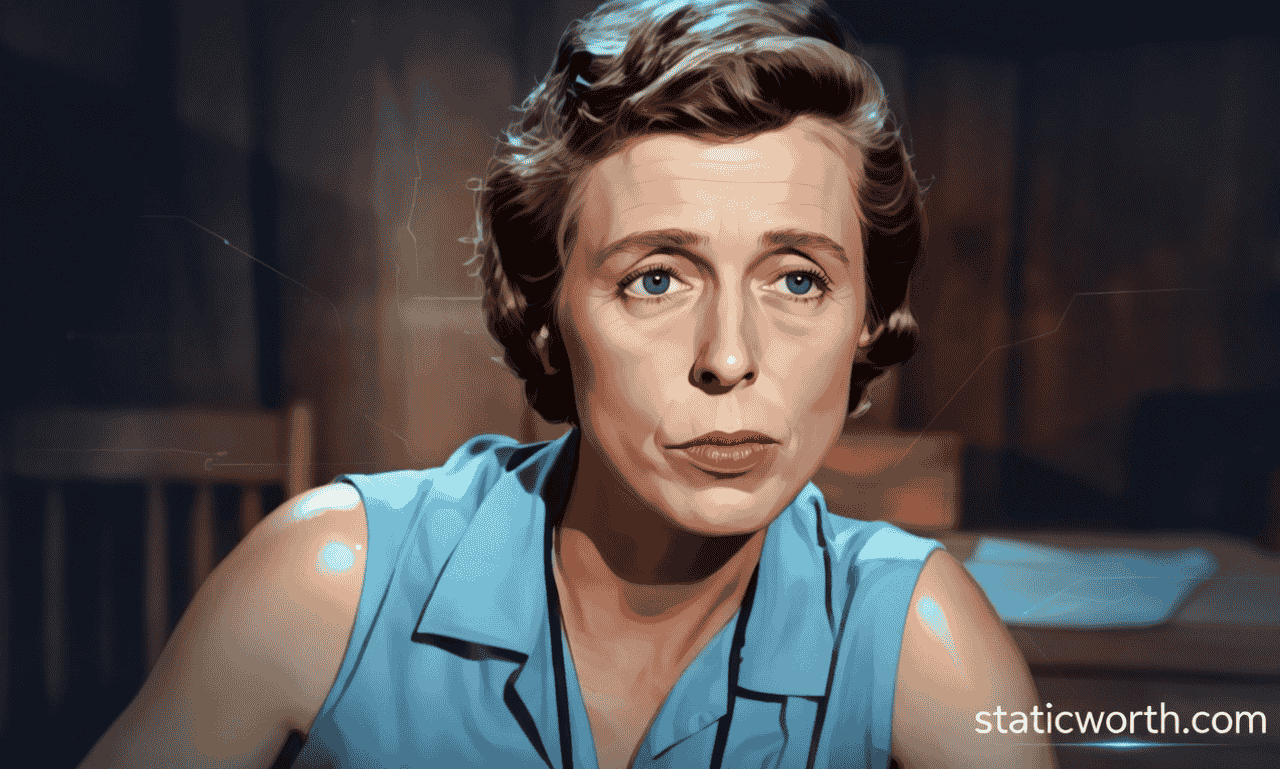
She was the sharp-witted secretary who stole scenes from multi-million-dollar stars, appeared in over 90 films and television titles, ran for Congress, and never once let Hollywood define her on its own terms. Nancy Kulp net worth at the time of her death in 1991 stood at an estimated $1 million to $1.3 million — a figure that only begins to capture what she built across four remarkable decades in American entertainment.
This article covers her full biography, early life, education, the career arc that made her a television legend, her personal life and marriage, her unsuccessful but courageous run for Congress, and the cancer diagnosis that brought her extraordinary life to a close on February 3, 1991. Whether you grew up watching The Beverly Hillbillies or you are discovering her story for the first time, what follows is a portrait of a woman far more complex and compelling than any television character she ever played.
Profile Summary
| Field | Details |
| Full Name | Nancy Jane Kulp |
| Known As | Nancy Kulp |
| Date of Birth | August 28, 1921 |
| Place of Birth | Harrisburg, Pennsylvania, USA |
| Date of Death | February 3, 1991 |
| Age at Death | 69 years old |
| Cause of Death | Cancer |
| Nationality | American |
| Profession | Actress, Comedian, Politician |
| Famous For | Miss Jane Hathaway on The Beverly Hillbillies |
| Education | University of Miami; University of Pennsylvania (Master’s Degree) |
| Military Service | U.S. Naval Reserve (World War II) |
| Marital Status | Divorced |
| Ex-Spouse | Charles Malcolm Dacus (m. 1951–1961) |
| Children | None |
| Years Active | 1951–1990 |
| Estimated Net Worth (1991) | $1–5 Million (approx.) |
| Political Affiliation | Democratic Party |
| Notable Films | Shane (1953), Sabrina (1954) |
| Notable TV Shows | The Beverly Hillbillies, The Love Boat, Fantasy Island |
Physical Appearance
| Attribute | Details |
| Full Name | Nancy Jane Kulp |
| Height | Approximately 5 feet 9 inches (175 cm) |
| Weight | Around 62–68 kg (136–150 lbs) (estimated during active years) |
| Body Type | Slim |
| Hair Color | Dark Brown (later gray in later years) |
| Eye Color | Brown |
| Distinctive Features | Tall frame, expressive facial expressions, sharp comedic presence |
| Style Persona | Often portrayed as sophisticated, professional, and intellectual on screen |
Nancy Kulp Net Worth: What Was She Worth at the Time of Her Death?
Nancy Kulp net worth at the time of her passing in February 1991 is commonly estimated between $1 million and $1.3 million. For a character actress working primarily in the 1950s through the 1980s — an era when supporting performers earned significantly less than lead stars — this figure represents genuine financial discipline and career longevity.
According to industry data commonly cited by entertainment historians, character actresses at major networks in the 1960s typically earned between $500 and $2,000 per episode — placing Kulp’s Beverly Hillbillies earnings in a respectable range across the show’s nine-year run. Her financial legacy, while modest by lead-actor standards, reflects a career built on consistency, versatility, and smart choices.
Career Highlights
| Year | Milestone |
| 1921 | Born in Harrisburg, Pennsylvania |
| 1943 | Graduated from Florida State College for Women with a BA in Journalism |
| 1940s | Served in the U.S. Naval Reserve, attaining the rank of lieutenant |
| 1951 | Married Charles Dacus; joined MGM’s publicity department; made film debut in The Model and the Marriage Broker |
| 1953–1954 | Appeared in Shane, Sabrina, and A Star Is Born |
| 1955–1959 | Played Pamela Livingstone on The Bob Cummings Show |
| 1961 | Divorced Charles Dacus; appeared in The Parent Trap |
| 1962 | Joined the cast of The Beverly Hillbillies as Miss Jane Hathaway |
| 1967 | Received a Primetime Emmy Award nomination |
| 1970 | Voiced Frou-Frou in Disney’s The Aristocats |
| 1971 | The Beverly Hillbillies ended after 9 seasons and 246 episodes |
| 1980–1981 | Performed on Broadway in Morning’s at Seven |
| 1981 | Reprised Miss Jane Hathaway in The Return of the Beverly Hillbillies |
| 1984 | Ran as Democratic candidate for Pennsylvania’s 9th Congressional District |
| 1990 | Diagnosed with cancer of the jaw |
| 1991 | Passed away on February 3 in Palm Desert, California, at age 69 |
Early Life: Harrisburg, Pennsylvania to Miami, Florida
Nancy Jane Kulp was born on August 28, 1921, in Harrisburg, Pennsylvania, the only child of Robert Tilden Kulp and Marjorie C. (née Snyder) Kulp. Her father worked as a traveling salesman, and her mother was a schoolteacher who later became a school principal — an educational influence that would leave a permanent mark on Nancy’s intellectual ambitions.
The family relocated from Mifflintown, Pennsylvania, to Miami-Dade County, Florida, sometime before 1935. Growing up in Miami during the Depression era shaped Kulp’s pragmatic approach to life and her respect for hard work. She was by all accounts a bright, curious child who found her way into writing and language at an early age.
Unlike many actresses of her generation who chased the spotlight from childhood, Kulp had no early theatrical ambitions. She was building an intellectual foundation — one that would eventually serve her in ways neither she nor anyone around her could have predicted. Her path to Hollywood was anything but direct, and that circuitous journey is precisely what made her such an original.
Education: A Journalist Before She Was an Actress
Nancy Kulp’s academic credentials set her apart from virtually every other actress of her era. In 1943, she graduated from Florida State College for Women (now Florida State University) with a Bachelor of Arts degree in Journalism. She then pursued postgraduate studies at the University of Miami, working toward a master’s degree in English and French literature, where she joined the Pi Beta Phi sorority.
These were not vanity credentials — she put them to practical use immediately. While still in her early twenties, Kulp worked as a feature writer for the Miami Beach Tropics newspaper, writing celebrity profiles of figures like Clark Gable and the Duke and Duchess of Windsor. Her interviewing instincts, sharp prose, and ability to read people quickly were already fully formed before she ever stood in front of a camera.
According to journalism educators, the analytical skills developed in a rigorous dual-discipline program like Kulp’s — journalism combined with literature — produce communicators with a distinct advantage in creative industries. Kulp proved the theory. Her writing background gave her an understanding of narrative and character motivation that would later make her one of the most effective comedic performers of the 1960s television era.
Military Service: Lieutenant Nancy Kulp in World War II
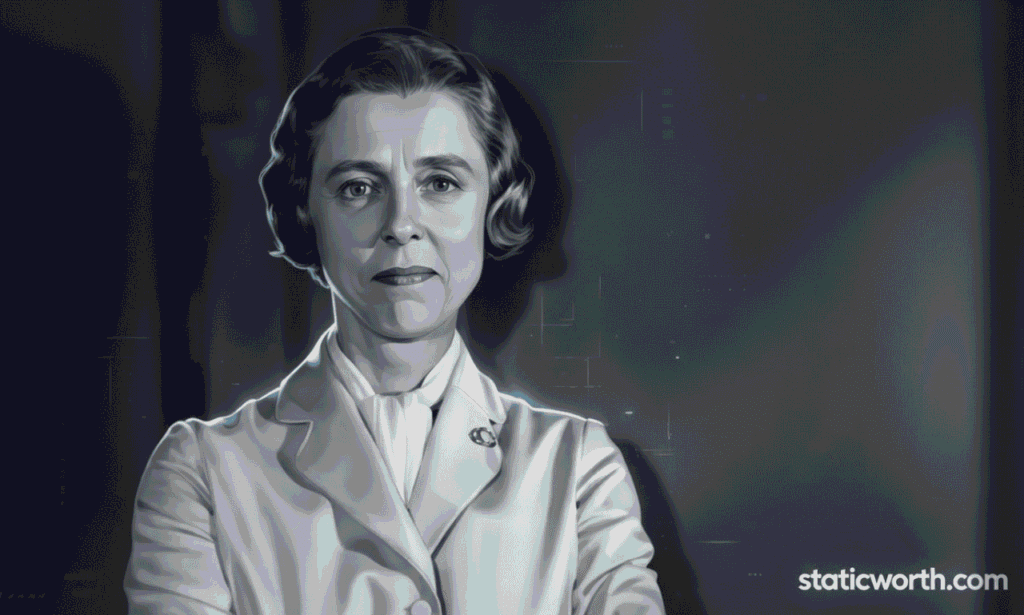
One of the most overlooked chapters of Nancy Kulp’s biography is her military service. During World War II, she enlisted in the United States Naval Reserve, serving as a lieutenant and junior grade officer. Her role involved administrative and communications functions, which drew directly on her journalism training and organizational skills.
Military service in the 1940s was not common for women, and officer-level rank was rarer still. Kulp’s willingness to step into that role reflects the same fearlessness that would later define her decision to walk into MGM’s publicity department, accept a challenge from a famous director, and eventually run for Congress. She did not wait for permission to occupy spaces that were not traditionally designed for her.
Her service also deepened her sense of civic responsibility — a value that would resurface decades later when she threw her hat into the political arena. For Kulp, public service was never a brand strategy. It was a genuine calling rooted in the values she carried from her upbringing and her military experience.
The Unexpected Path to Hollywood: George Cukor’s Eye
After the war, Nancy Kulp had no intention of becoming an actress. She moved to Van Nuys, California, following her 1951 marriage to Charles Malcolm Dacus, and took a position in MGM’s publicity department — working behind the camera, crafting narratives about stars rather than becoming one herself.
That changed quickly. Director George Cukor, one of Hollywood’s most celebrated filmmakers — known for guiding Katharine Hepburn, Judy Garland, and Audrey Hepburn to iconic performances — spotted Kulp at the studio and saw something in her that she had not yet seen in herself. Together with casting director Billy Gordon, Cukor encouraged her to move in front of the camera.
She made her film debut in 1951 in The Model and the Marriage Broker, directed by Nunnally Johnson. It was a modest start, but the foot was in the door. Within a few years, she appeared in some of the most important films of the 1950s — including Shane (1953), Sabrina (1954), and A Star Is Born (1954) — in character roles that showcased her precision and comedic timing.
The entertainment industry publication Variety has historically noted that the 1950s Hollywood studio system produced some of the most technically accomplished character performers in American cinema history, and Kulp belongs firmly in that tradition.
The Bob Cummings Show: The Role That Put Her on the Map

Before The Beverly Hillbillies made her a household name, Nancy Kulp established her television credentials on The Bob Cummings Show (also known as Love That Bob), where she played Pamela Livingstone — a pith-helmeted, bird-watching neighbor whose deadpan enthusiasm for ornithology was consistently one of the series’ funniest running gags.
She joined the cast in 1955 and remained through the show’s run until 1959. Her work on the series demonstrated that she could anchor a recurring comedic character with layers of personality — eccentric without being cartoonish, funny without sacrificing humanity. The role earned her industry recognition and solidified her reputation as a character actress of the first order.
Ironically, the same quality that one Hollywood gossip column cruelly called a disadvantage — calling her “the homeliest girl in television” in a reference to the Livingstone role — was actually the very quality that made her so effective. Kulp did not try to look like what the industry expected. She looked like herself, and she made that uniqueness into a comedic and dramatic asset that very few actors of either gender could replicate.
The Beverly Hillbillies: Miss Jane Hathaway and Nationwide Fame
In 1962, Nancy Kulp landed the role that would define her public legacy: Miss Jane Hathaway, the efficient, bird-watching, perennially lovesick bank secretary on CBS’s The Beverly Hillbillies. She appeared in all 246 episodes of the series, which ran from 1962 to 1971, alongside Buddy Ebsen, Irene Ryan, Max Baer Jr., and Donna Douglas.
Miss Jane Hathaway was a brilliant comedic creation — intelligent in a world that did not value intelligence, competent in an environment of chaos, and perpetually hopeful in the face of relentless disappointment. Kulp played her with warmth, precision, and a genuine affection for the character that audiences immediately recognized and responded to.
Her performance earned her a Primetime Emmy Award nomination in 1967 — a rare honor for a character actress in a supporting role during an era when such recognition was heavily skewed toward lead performers. The show itself was one of the highest-rated programs in American television history, drawing up to 60 million viewers per week at its peak, according to CBS historical ratings data.
An interesting behind-the-scenes fact: the writers of the show subtly honored Kulp by naming her character after her own name in reverse. Nancy Jane Kulp became Jane Nancy Hathaway — a small tribute that speaks to the affection the production team held for her.
Film Career Beyond Television: From Shane to The Aristocats
While The Beverly Hillbillies dominated the 1960s chapter of her career, Nancy Kulp’s film work deserves its own spotlight. She appeared in an impressive range of productions across genres:
| Title | Year | Description |
| Shane | 1953 | The classic Western starring Alan Ladd |
| Sabrina | 1954 | Billy Wilder’s romantic comedy with Audrey Hepburn and Humphrey Bogart |
| A Star Is Born | 1954 | Judy Garland’s iconic musical drama |
| The Parent Trap | 1961 | Disney’s beloved comedy starring Hayley Mills |
| Who’s Minding the Store? | 1963 | Jerry Lewis comedy |
| The Night of the Grizzly | 1966 | Western starring Clint Walker, where Kulp played Wilhelmina Peterson |
| The Aristocats | 1970 | Disney animated feature, where she voiced the elegant horse Frou-Frou |
The breadth of this filmography demonstrates a performer of remarkable adaptability. She moved from prestige dramas to slapstick comedies to Disney animation with equal ease — a range that very few character actors of her generation could match.
Post-Beverly Hillbillies: Broadway, Teaching, and Continued Television Work
When The Beverly Hillbillies ended in 1971, Kulp did not slow down. She transitioned into a period of eclectic activity that included Broadway, regional theater, teaching, and continued television appearances.
Her most notable stage work came in 1980–1981, when she appeared in the Broadway production of Morning’s at Seven at the Lyceum Theatre, playing Aaronetta Gibbs as a replacement for Elizabeth Wilson. Broadway exposure at that stage of her career reflected both her continued ambition and the industry’s respect for her abilities.
She also served as an artist-in-residence at Juniata College in Pennsylvania — a role that allowed her to blend her love of teaching with her performing arts expertise. Students who studied under her during this period have spoken about the rigor and generosity she brought to the classroom.
On television, she continued making guest appearances throughout the 1970s and 1980s, including roles on The Brian Keith Show, Sanford and Son, The Love Boat, Simon & Simon, and a memorable appearance on Quantum Leap in April 1989. In 1981, she reprised her most famous role in the television film The Return of the Beverly Hillbillies, delighting fans who had never forgotten Miss Jane.
The 1984 Congressional Race: Nancy Kulp the Politician
One of the most underappreciated chapters of Nancy Kulp’s life is her foray into politics. In 1984, at age 62, she ran as the Democratic nominee for Pennsylvania’s 9th Congressional District — challenging six-term Republican incumbent Bud Shuster in a heavily Republican district.
Her campaign faced an uphill battle from the start. She acknowledged openly that some voters might view her background as an actress as “frivolous” — though she pointedly noted that Ronald Reagan had made the same journey from screen to politics with rather more success.
What derailed her campaign most visibly was the intervention of her Beverly Hillbillies co-star Buddy Ebsen, an ardent Republican, who recorded a radio advertisement for Shuster calling Kulp “too liberal.” The ad resonated in the conservative district. Kulp received 59,449 votes — 33.6% of ballots cast — compared to Shuster’s 117,203. She lost decisively, and the betrayal by a former colleague stung deeply.
She was characteristically direct about her feelings: she stated publicly that Ebsen had no business involving himself in her campaign, and she largely cut contact with him for years afterward. They eventually reconciled shortly before her death — a grace note in an otherwise painful story. Ebsen privately expressed remorse for his actions in later years.
Nancy Kulp’s Marriage and Personal Life
Nancy Kulp married Charles Malcolm Dacus on April 1, 1951, in Dade County, Florida — just weeks before she launched her acting career at MGM. The couple had no children. They divorced in 1961, coinciding with one of the most professionally significant periods of her life, as The Beverly Hillbillies was about to make her a star.
After her divorce, Kulp kept her personal life largely private. She was known among close friends and colleagues as warm, witty, intellectually engaged, and deeply loyal — someone who chose her words carefully and her relationships even more carefully.
Later in life, she acknowledged publicly that she had “swung both ways” in her personal relationships — a remarkably candid statement for a woman of her generation. She did not make it a defining public identity, but neither did she hide it. In the context of Hollywood in the 1950s and 1960s, such honesty required considerable courage.
She spent her retirement years in Palm Desert, California, where she lived until her death. She was interred at Westminster Presbyterian Cemetery in Mifflintown, Pennsylvania — the town where her family had roots going back generations.
Nancy Kulp’s Cause of Death: The Final Battle
In 1990, Nancy Kulp received a devastating diagnosis: cancer of the jaw. The disease forced her to step back from professional activities at a time when she was still intellectually and creatively engaged with the world. She underwent chemotherapy, fighting with the same determination she had brought to every challenge in her life.
Despite her resilience, the cancer progressed. On February 3, 1991, Nancy Kulp passed away at her home in Palm Desert, California, at the age of 69. Her death prompted an outpouring of tributes from colleagues, fans, and public figures who recognized the depth of her contributions to American entertainment and public life.
She was laid to rest at Westminster Presbyterian Cemetery in Mifflintown, Pennsylvania — a quiet, dignified final resting place for a woman who had lived anything but a quiet life.
Her death marked the end of a remarkable chapter in American television history. The character of Miss Jane Hathaway, which she had made entirely her own across nine years and 246 episodes, became part of the permanent cultural record — a tribute to the power of a great character actress working at the height of her abilities.
Legacy: Why Nancy Kulp Still Matters Today
Nancy Kulp’s legacy extends far beyond a single television role. She was a journalist, a Navy veteran, a film actress, a Broadway performer, a teacher, a political candidate, and a woman who lived authentically in an era that made authenticity professionally dangerous.
Her impact on television comedy is well-documented. Character actors who appeared on classic sitcoms like The Beverly Hillbillies helped shape the visual and comedic language of American television — and Kulp was among the best of them. The show’s cultural footprint remains enormous: it consistently ranks among the most-watched programs in CBS history, and Miss Jane Hathaway is among its most enduring characters.
Beyond entertainment, Kulp modeled what it looks like to take intellectual life seriously while working in an industry that often discouraged it. She had advanced degrees, wrote for newspapers, taught at universities, and ran for Congress — all while building a successful acting career. That breadth of engagement represents a standard that most public figures, in any era, fall short of.
Frequently Asked Questions
1.What was Nancy Kulp’s net worth at the time of her death?
Nancy Kulp net worth at the time of her death in 1991 is estimated at $1 million to $1.3 million. Her wealth came primarily from her nine-year run on The Beverly Hillbillies, film appearances in over 90 productions, residual payments from syndication, and income from teaching and theater work.
2.What was Nancy Kulp’s cause of death?
Nancy Kulp died on February 3, 1991, from cancer of the jaw. She was diagnosed in 1990 and underwent chemotherapy, but the disease progressed. She passed away at her home in Palm Desert, California, at the age of 69 and was laid to rest in Mifflintown, Pennsylvania.
3.Who was Nancy Kulp’s husband?
Nancy Kulp married Charles Malcolm Dacus on April 1, 1951, in Dade County, Florida. The couple had no children and divorced in 1961. After the divorce, Kulp remained largely private about her personal relationships, though she later acknowledged in interviews that her personal life had been varied.
4.Why did Nancy Kulp run for Congress?
Nancy Kulp ran as the Democratic nominee for Pennsylvania’s 9th Congressional District in 1984 out of genuine civic conviction. She had worked with the Pennsylvania Democratic state committee for years before running. She lost to six-term Republican incumbent Bud Shuster, partly due to a campaign radio ad made by her Beverly Hillbillies co-star Buddy Ebsen calling her “too liberal.”
5.Was Nancy Kulp nominated for an Emmy Award?
Yes, Nancy Kulp received a Primetime Emmy Award nomination in 1967 for her role as Miss Jane Hathaway on The Beverly Hillbillies. The nomination was a significant recognition for a character actress in a supporting role — an acknowledgment of the exceptional comedic and dramatic work she brought to the show consistently across its nine-year run.
Conclusion: A Life That Defied Every Category
Nancy Kulp was too complicated and too accomplished to fit neatly into any single story. She was a writer before she was an actress, a veteran before she was a star, a teacher alongside her television career, and a political candidate when most people her age were settling into retirement. Nancy Kulp net worth of $1 million reflects earnings built across a career that never stopped evolving and never accepted a single identity as the whole truth.
She played a character named Miss Jane Hathaway for nine years and made her immortal — but she was always far more than that character. She was sharp, principled, courageous, and deeply human. And she deserves to be remembered on those terms.
If Nancy Kulp’s story resonated with you, share this article with a fellow fan of classic television or someone who loves discovering the remarkable lives behind iconic roles. And if you have memories of watching her on The Beverly Hillbillies, drop them in the comments — her fans are still out there, and they are still paying attention.
The best legacies are the ones that keep earning interest — and Nancy Kulp’s is compounding still.
As Nancy Kulp is not alive now so You should read more about Janai Norman , Emilie Kiser and more at staticworth.com

Ora Skye, founder of Static Worth specializes in creating authentic, engaging, and well-researched Celebrity blogs that connect with readers worldwide.
1 thought on “Nancy Kulp Net Worth : Bio, Career & Cause Of Death”