
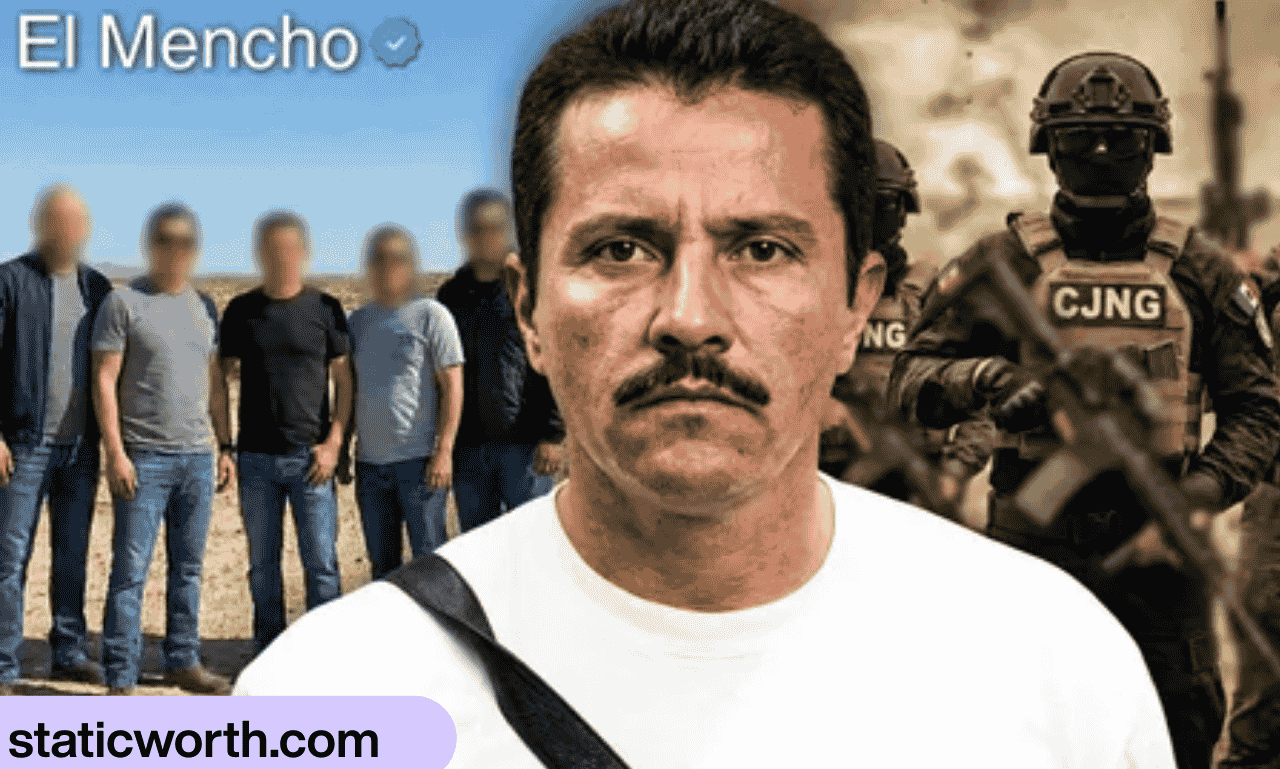
For years, El Mencho was the most wanted man in both Mexico and the United States — a drug lord so elusive that all known photographs of him were decades old. On February 22, 2026, that changed. Mexican special forces, aided by U.S. intelligence, tracked him to a mountain compound in Jalisco and killed him in a firefight that shook the country.
This article covers everything — his real name, age, early life, criminal rise, net worth, wife, children, romantic partner who led to his capture, and the full story of his death and its aftermath. Every section delivers verified facts on one of the most significant figures in modern organized crime.
El Mencho Profile Summary
| Category | Details |
| Real Name | Nemesio Rubén Oseguera Cervantes |
| Alias | El Mencho, Lord of the Roosters |
| Date of Birth | July 17, 1966 |
| Place of Birth | Aguililla, Michoacán, Mexico |
| Age at Death | 59 years old |
| Date of Death | February 22, 2026 |
| Place of Death | Died en route to Mexico City (wounded in Tapalpa, Jalisco) |
| Nationality | Mexican |
| Profession | Drug Lord, Cartel Leader |
| Organization | Jalisco New Generation Cartel (CJNG) |
| Co-founded CJNG | c. 2007–2010 |
| Wife | Rosalinda González Valencia (married 1996, separated 2018) |
| Romantic Partner (at death) | Guadalupe Moreno Carrillo |
| Children | Rubén “El Menchito,” Jessica Johana, Laisha |
| U.S. Bounty | $15 million (DEA) |
| Mexico Bounty | MXN $300 million |
| Estimated Net Worth | $500 million – $1 billion+ |
| Cause of Death | Gunshot wounds sustained during military raid |
El Mencho Physical Description
| Feature | Details |
| Height | Approx. 5 ft 8 in (173 cm) |
| Build | Medium, stocky |
| Hair Color | Dark, greying in later years |
| Eye Color | Dark Brown |
| Distinguishing Features | Rarely photographed; all known photos were decades old at death |
| Known Health Issues | Kidney disease (reported since 2020) |
| Style | Extremely low public profile — no known displays of wealth |
Who Was El Mencho?
El Mencho was the alias of Nemesio Rubén Oseguera Cervantes, a Mexican drug lord and founder of the Jalisco New Generation Cartel — known by its Spanish initials CJNG. At the time of his death, the FBI considered the CJNG Mexico’s most powerful trafficking organization, responsible for the bulk of cocaine, heroin, methamphetamine, and fentanyl entering the United States.
His nickname “El Mencho” derives from a diminutive of Nemesio in Mexican Spanish slang. He was also known as the “Lord of the Roosters,” reflecting his well-documented passion for cockfighting — a tradition deeply embedded in his home state of Michoacán. He cultivated an almost mythical level of secrecy, keeping such a low public profile that his existence became a subject of ongoing speculation even among law enforcement.
El Mencho Early Life: Journey from Noting to Everything
Oseguera Cervantes was born on July 17, 1966, in the rural community of Culotitlán in Aguililla, Michoacán — a mountainous region long associated with drug cultivation and cartel activity. He dropped out of primary school and worked growing avocados before leaving Mexico as a young man.
His first name was recorded as both “Rubén” and “Nemesio” in different documents. According to commonly cited sources, he later changed his name to Nemesio in memory of a godfather. Born into poverty with limited formal education, his early trajectory followed a path familiar to many who entered Mexico’s criminal economy — agricultural work, migration, and eventually organized crime.
Arrests and Deportation
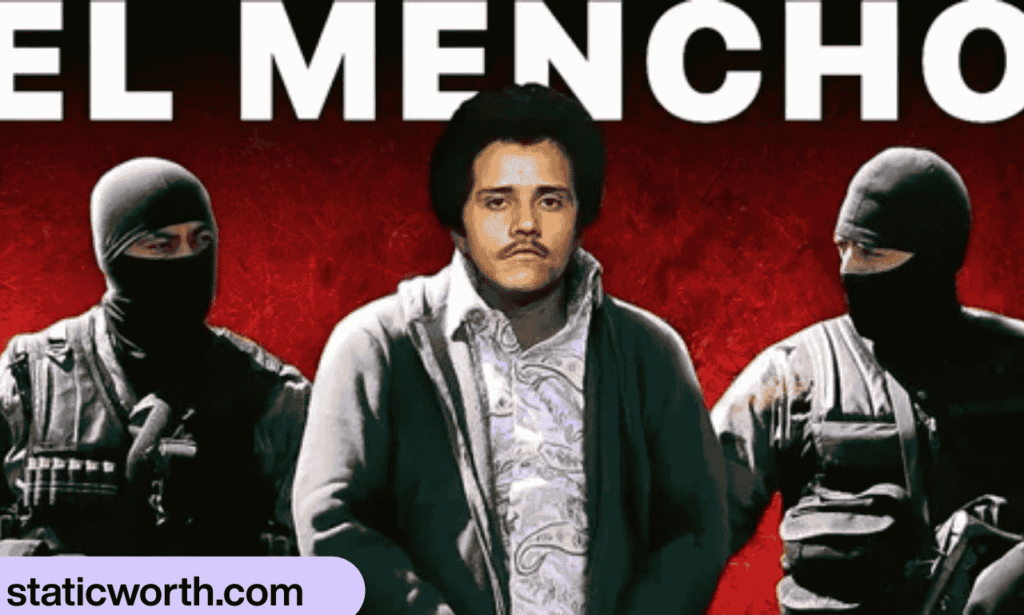
El Mencho’s ties to the United States run deeper than most people realize. In 1986, he immigrated illegally to the San Francisco Bay Area, where he became involved in methamphetamine production and trafficking in Redwood City.
His U.S. criminal history unfolded in quick succession:
| Year | Location | Incident | Outcome |
| 1986 | San Francisco, California | Arrested for theft and carrying a loaded weapon | Charged; early criminal record established |
| 1989 | San Francisco, California | Arrested for selling narcotics | Convicted; deported to Mexico |
| 1992 | Sacramento, California | Re-arrested on federal drug charges | Served time in U.S. federal prison |
| 1996 | U.S. Federal System | Completed federal prison sentence | Released and deported to Mexico at approximately age 30 |
After deportation, he joined local police forces in Cabo Corrientes and Tomatlán in Jalisco before leaving law enforcement entirely and returning to organized crime full-time.
How El Mencho Built the CJNG from the Ground Up
After his return to Mexico, Oseguera joined the Milenio Cartel — strengthening his position by marrying Rosalinda González Valencia, a sister of key Milenio figures. He rose through the cartel’s ranks as an enforcer before the Milenio Cartel began fracturing under pressure from the Zetas.
He led a faction called Los Mata Zetas — a group that fought the Zetas aggressively across western Mexico. After consolidating control, he rebranded the organization as the Jalisco New Generation Cartel around 2010. According to the FBI, the CJNG expanded from a regional operation to a coast-to-coast network within six months — one of the fastest cartel expansions in Mexican criminal history.
CJNG Under El Mencho: Scale, Power, & Global Reach
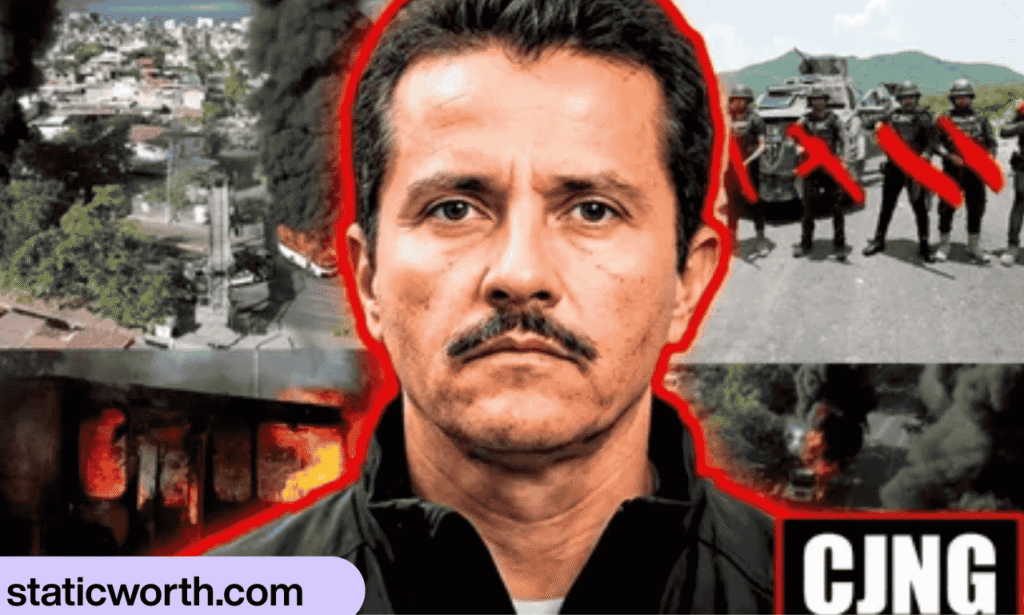
Under El Mencho’s leadership, the CJNG transformed from a regional criminal group into what law enforcement called one of the most militarized, technologically advanced, and globally connected criminal organizations in the Western Hemisphere.
The scale of operations was staggering:
- By 2018, the CJNG operated over 100 methamphetamine labs throughout Mexico
- The cartel’s cocaine trade generated an estimated $8 billion annually based on average street value
- Crystal meth operations added an estimated $4.6 billion per year
- The CJNG maintained active drug trafficking routes through Latin America, the United States, and parts of Asia
- Beyond drugs, the cartel profited from extortion, migrant smuggling, and oil and mineral theft across Mexico
The U.S. DEA identified the CJNG as one of the leading suppliers of fentanyl to the United States — a designation that made El Mencho a central target in the American fentanyl crisis.
El Mencho Net Worth 2026
El Mencho’s net worth is estimated between $500 million and $1 billion, making him one of the wealthiest cartel leaders in modern history. A 2019 DEA assessment suggested his personal wealth could exceed $1 billion when accounting for the full scope of his cartel’s operations and hidden assets.
A report from Univision placed the combined family wealth at “at least USD 500 million and possibly exceeding USD 1 billion.” His wife Rosalinda oversaw a network of over 70 legal-appearing businesses — restaurants, real estate ventures, and hospitality enterprises — used to launder cartel profits. The CJNG’s annual illicit revenue ran into the tens of billions, making even a conservative personal share an enormous figure.
His wealth was deliberately hidden. He maintained no known displays of luxury and kept all known photographs decades out of date — a calculated anonymity that extended to his finances.
El Mencho’s Wife:

Rosalinda González Valencia — known by her alias “La Jefa” (The Boss) — was far more than El Mencho’s wife. She was a key operational figure in her own right, coming from the influential Valencia family that founded Los Cuinis, the CJNG’s financial and money-laundering arm.
The couple married in 1996 and formally separated in 2018, though they remained legally married as of January 2025 according to Mexican defense sources. They had three children together. Rosalinda was arrested in May 2018 on money laundering charges, released on bail of MXN $1.5 million, then re-arrested in November 2021. In December 2023, she was sentenced to five years in prison for financial crimes — and received an early release in February 2025, just one year before her estranged husband’s death.
El Mencho’s Children and Family Network
El Mencho and Rosalinda had three children, all of whom drew significant law enforcement attention:
Rubén Oseguera González (“El Menchito”)
Once served as second-in-command of the CJNG; arrested and convicted in the United States, where he remains in custody. His imprisonment in the U.S. broke the direct line of succession.
Jessica Johana Oseguera González (“La Negra”)
Arrested and jailed in the United States in 2021 for managing cartel-linked businesses including restaurants and tequila ventures used to launder CJNG funds.
Laisha Oseguera
Suspected of cartel connections; authorities sought her following an incident involving naval personnel in Zapopan.
With El Menchito imprisoned in the United States, analysts identified Juan Carlos Valencia González (“El Pelón”) — El Mencho’s stepson — as the de facto second-in-command at the time of the operation.
El Mencho’s Girlfriend : The Woman Who Led to His Death
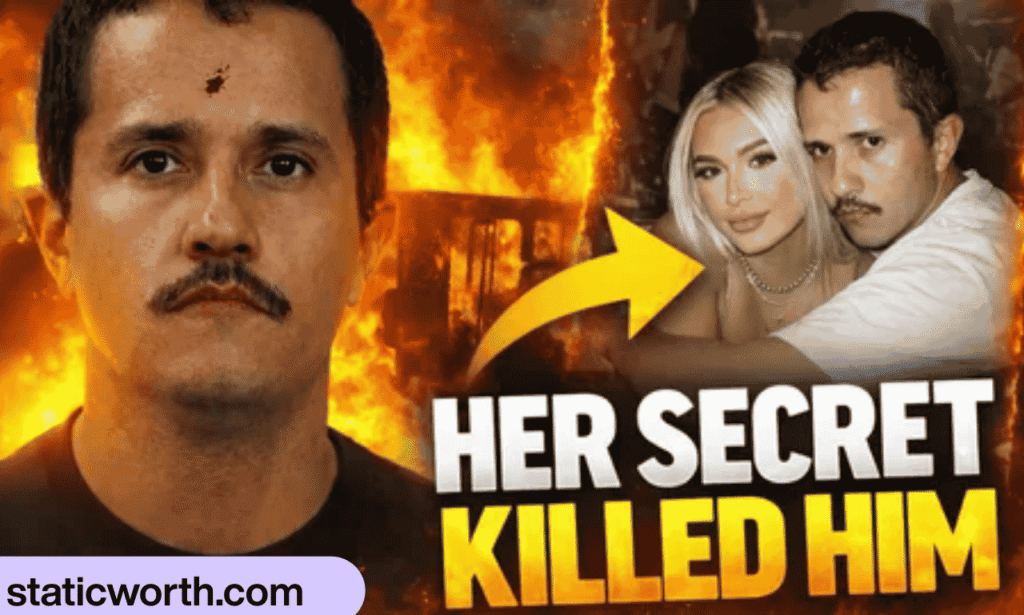
At the time of his death, El Mencho had been in a relationship with Guadalupe Moreno Carrillo, separate from his estranged wife Rosalinda. This relationship proved to be the operational vulnerability that ended his life.
On February 20, 2026, Mexican military intelligence tracked a trusted associate who transported Moreno Carrillo to a residence at the Tapalpa Country Club — an upscale gated community in the municipality of Tapalpa, Jalisco. Security forces confirmed that she met with Oseguera at the property before departing on February 21. El Mencho remained. With his presence confirmed, the raid was authorized for February 22.
El Mencho Death: The February 22, 2026 Operation Explained
How the Raid Unfolded
On the morning of February 22, 2026, Mexican Army special forces launched a pre-dawn raid on the Tapalpa Country Club compound in the mountainous terrain of Jalisco, approximately two hours southwest of Guadalajara. The operation was coordinated with the U.S. Joint Interagency Task Force-Counter Cartel (JITC-CC), which provided critical intelligence on CJNG movements in the days preceding the raid.
As troops advanced on the property, CJNG gunmen opened fire using high-caliber firearms and heavy weaponry. Multiple cartel members were killed during the initial confrontation. El Mencho and members of his security detail fled into the surrounding wooded terrain, triggering a second armed confrontation. A military helicopter providing aerial support was struck by gunfire and forced to make an emergency landing in nearby Sayula.
The Final Moments
During the second firefight in the wooded area beyond the compound, El Mencho and two bodyguards were shot. He was critically wounded and taken into custody. According to the Mexican Secretariat of National Defense, Oseguera Cervantes died of his gunshot wounds while being airlifted to Mexico City. He was 59 years old. Eight CJNG members were killed in total during the operation. Two others were arrested. Armored vehicles, rocket launchers, and heavy weaponry were seized at the compound.
Results of EL Mencho Death
The death of El Mencho triggered one of the most intense waves of retaliatory cartel violence Mexico had seen in years. Within hours of the operation, CJNG commanders organized coordinated attacks across the country.
The immediate aftermath included:
- 250 roadblocks established nationwide using hijacked trucks, buses, and private vehicles set on fire
- Incidents reported in 20 Mexican states, including Jalisco, Michoacán, Guanajuato, Colima, Tamaulipas, and Sinaloa
- Over 70 attacks in 23 municipalities in Guanajuato alone, including 60 arson attacks
- 25 National Guard members killed in clashes in Jalisco state
- Guadalajara, Mexico’s second-largest city and a 2026 FIFA World Cup host venue, became a ghost town as civilians sheltered in place
- Vehicles burned in Puerto Vallarta; smoke visible across the tourist city
- School canceled in several states on the following Monday
El Mencho’s right-hand man, known as “El Tuli,” reportedly organized the retaliatory attacks and placed a 20,000 peso bounty on the life of each military member. He was later tracked to El Grullo, Jalisco, and killed by security forces the same day.
U.S. Role in the El Mencho Operation
American involvement in the operation was confirmed at the highest levels of the U.S. government. White House Press Secretary Karoline Leavitt confirmed that the United States provided intelligence support to the Mexican government in the Tapalpa operation.
The U.S. Deputy Secretary of State Christopher Landau called El Mencho “one of the bloodiest and most ruthless drug kingpins” and described his death as a positive development for Mexico, the United States, Latin America, and the world. The DEA had previously maintained a $15 million reward for information leading to his capture — the same bounty that had been active for years without result.
What El Mencho’s Death Means for Mexico and the CJNG
Security analysts described El Mencho’s killing as the most significant blow against Mexican organized crime since the recapture of Joaquín “El Chapo” Guzmán nearly a decade earlier. However, experts were quick to contextualize its impact.
With his son El Menchito imprisoned in the U.S. and no clear immediate successor, the CJNG faces a significant leadership vacuum. Analysts at the International Crisis Group and independent security consultants identified several likely outcomes — internal succession battles among regional commanders, potential fragmentation of the cartel, or an attempt at a negotiated internal leadership transition. Chris Dalby, senior analyst at InSight Crime, noted that removing El Mencho was significant but not fatal to the organization: the flow of drugs, the infrastructure, and the regional commanders all remain.
El Mencho’s Legacy: The CJNG’s Lasting Impact
El Mencho built the CJNG from a regional gang into a criminal empire that the FBI identified as Mexico’s most powerful trafficking organization. His methods were deliberately brutal and public — bodies displayed on lampposts, decapitated heads on roadsides — tactics analysts compared to Genghis Khan’s approach to conquest: destroy opposition visibly so resistance loses its appeal.
Under his leadership, the CJNG attempted to assassinate Mexico’s then-public security secretary Omar García Harfuch in Mexico City in June 2020 — a brazen attack in which two bodyguards and a civilian were killed. In 2015, CJNG gunmen shot down a Mexican military helicopter with a rocket-propelled grenade. These were not acts of desperation — they were deliberate demonstrations of power directed at the Mexican state itself.
Frequently Asked Questions
Who was El Mencho?
El Mencho was Nemesio Rubén Oseguera Cervantes, leader of Mexico’s CJNG cartel, killed by Mexican forces on February 22, 2026.
How old was El Mencho when he died?
He was 59 years old at the time of his death, born July 17, 1966, in Aguililla, Michoacán, Mexico.
How did El Mencho die?
He was wounded during a Mexican Army raid in Tapalpa, Jalisco, and died of gunshot wounds en route to Mexico City.
What was El Mencho’s real name?
His real name was Nemesio Rubén Oseguera Cervantes. He was also known as “Lord of the Roosters.”
What is El Mencho’s net worth?
His net worth is estimated between $500 million and $1 billion, based on DEA assessments and cartel revenue estimates.
Who was El Mencho’s wife?
His wife was Rosalinda González Valencia, also known as “La Jefa.” They married in 1996 and separated in 2018.
Who helped find El Mencho?
U.S. intelligence tracked a trusted associate who transported El Mencho’s romantic partner to his Tapalpa hideout on February 20, 2026.
What happened after El Mencho was killed?
CJNG retaliated with over 250 roadblocks across 20 Mexican states, arson attacks, and the killing of 25 National Guard members.
Who leads the CJNG after El Mencho’s death?
No official successor has been named. El Mencho’s stepson “El Pelón” was considered de facto second-in-command before the operation.
Was El Mencho connected to fentanyl trafficking?
Yes. The DEA identified him as one of the top fentanyl traffickers into the United States, a central factor in his $15 million U.S. bounty.
Conclusion
El Mencho — Nemesio Rubén Oseguera Cervantes — built one of the world’s most powerful criminal organizations from poverty in rural Michoacán. His death on February 22, 2026, removed the most wanted man in both Mexico and the United States from the board. However, as analysts warned immediately, the CJNG’s infrastructure, routes, and commanders remain intact.
If this complete biography gave you real clarity on one of history’s most significant cartel figures, share it or explore related coverage on organized crime and the ongoing fentanyl crisis.
The death of a leader ends a chapter — but the criminal economy that created him doesn’t disappear with the man.
If you liked this, you’ll love these next:
- Kurt Perez – The Blacklist
- Bigxthaplug – a Famous Hip-Hop Artist
- Emilie Kiser – an Example for Women

Ora Skye, founder of Static Worth specializes in creating authentic, engaging, and well-researched Celebrity blogs that connect with readers worldwide.